Why More Time Is Not Necessarily the Solution to Mum’s Burnout

You’re exhausted, constantly rushing between your job and the kids without a minute for yourself. You dream of having a few extra hours in the day to finally accomplish all the things you’re supposed to do.
But what if more time wasn’t the solution?
It’s likely that if you were given an extra 30 minutes, you’d fill them with replying to work emails or getting another load of laundry done. You’d definitely find ways to stay busy. But would that actually help you feel more balanced?
The reality is there are only 24 hours in a day. So the real question is: what do we do with those hours?
In this blog, I’ll explore why being intentional with your time matters; and why rest and fun are essential if you want to use your time wisely.
1. More time without intention won’t help

Have you ever finished a workday thinking “Have I even accomplished anything today?” Looking back, you might have realised that you jumped from one (useless) meeting to another, were constantly interrupted, went down a rabbit hole researching a side project that finished in the bin… and in the end, you didn’t move forward on that big looming deadline.
No need to feel ashamed, I’ve been there too (and still find myself there from time to time). When we don’t have a clear plan for how we’re going to use our time, we tend to gravitate towards easy tasks. We get sucked into distractions and forget what will truly move us forward.
The same applies at home. You take the afternoon off to spend quality time with your kids, but somehow you end up cleaning the bathroom, reorganising closets and putting toys away. When the evening comes, you realise you haven’t even played with them.
That’s when intention matters.

If, when sitting at your desk in the morning, you set the intention to advance on a specific project, you’re far less likely to get distracted (the more precise you are about your final outcome, the better). But if you have no plan at all, you’ll open your emails and you might get trapped for hours replying to requests that weren’t urgent.
Similarly, if you decide that this afternoon you’re going to spend at least one hour playing with your child and being fully present, you’re less likely to get pulled away by the plates piling up in the sink or by a notification popping up on your phone.
2. When you’re burnt out but can’t stop the hamster wheel
It’s quite possible that there is so much on your plate that you feel you that you don’t even have one second to stop and set intentions. You’d give anything for 20 extra minutes of breathing space.
The issue is, I’m almost certain that if you were given 20 extra minutes, you wouldn’t use them to breathe. You’d use them to tick off one more thing on your list, without pausing to ask yourself whether that thing actually matters.
When I was working in academia, I completely neglected my wellbeing to generate just one more small piece of data that I thought would help with publication. I tried to collect as much data as possible, as if my experiments were the most important things in the world.
In hindsight, very little of that really mattered. A large proportion of the data I generated never saw the light of publication. What felt absolutely crucial at the time, what I wholeheartedly sacrificed my mental health for, was in reality quite insignificant.
But I was under pressure and so deep in my workload that I wasn’t able to think clearly or strategically, both in terms of research advancement and personal growth.

It’s very easy to lose sight of what’s important when you’re exhausted and overwhelmed. Because there is so much to do, you feel you can’t stop, otherwise you’ll waste precious time. So you pick up any task just to get something done, even if it doesn’t make much difference that task gets done or not.
And the cycle continues, because what truly needs attention is still not being addressed.
The only way to break this cycle is to allow yourself to rest. And once you’ve rested enough to think clearly, to take time to reflect and consciously choose what is truly important.
3. Let go of the guilt: schedule “me-time”
The best way to keep your mind clear is to ensure you have regular downtime to refill your cup.
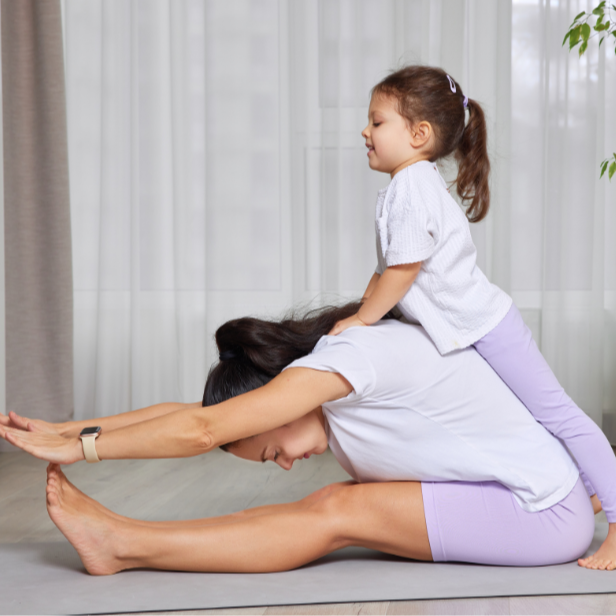
Exercise is a non-negotiable. Not only for your physical health, but for your mental health too! Yet so many mothers skip it. I’ve met countless women who exercised regularly before having children and stopped after welcoming their first child.
That makes total sense, especially when children are very young and the days feel chaotic. Yes, there are options to exercise with kids. Yet, having attended “mum-and-bub” pilates classes myself, I can say that if you manage to squeeze in 10 minutes of actual exercise during the session, you’re lucky. Most of the time was spent breastfeeding and cuddling baby…
And yet, our minds need movement to function well. Even if it feels difficult to fit into your schedule, make it a priority. Thirty minutes of movement can give you back hours of productivity, because you’ll think more clearly, regulate your emotions more effectively, and make better decisions.
Another thing that’s even harder for mums to prioritise is fun. Pure fun. Something just for you.
It doesn’t matter whether it’s alone or with friends, it just needs to be something you do for the sake of enjoyment. And this often feels uncomfortable because as women, we’re conditioned to put everything before ourselves: work, children, partners, ageing parents, even friends. Time for ourselves can seem selfish. Or wasted (there’s so much to do, why spend a few hours having fun?)
But this time isn’t wasted. Research shows that when women struggle to incorporate leisure while juggling work and family responsibilities, they experience more psychosomatic symptoms. So when you have fun, you actually take care of your health.
The challenge is that mum’s “me-time” often comes after everything else is done. But wait a minute… we’re never finished! There’s always something more to do. That’s exactly why we’re rushing all the time. If we wait until everything is done before we rest or have fun, we’ll never get there. And we’ll stay stuck in the cycle of mental fog and constant busyness.
That’s why scheduling downtime, movement and fun is essential. If it’s not in your calendar, it will always be pushed to “later.”

In Conclusion, if you want to accomplish more, you need to give yourself permission to pause. You need to care for your body and your mind. You need to make space for the things that make you feel good and genuinely happy. Because when you do, you think more clearly. And when you think clearly, you can be intentional about how you invest your time.
Looking for some extra tips?
For simple practical advice on how to organise your time with a busy schedule, check out my free time management training for mums