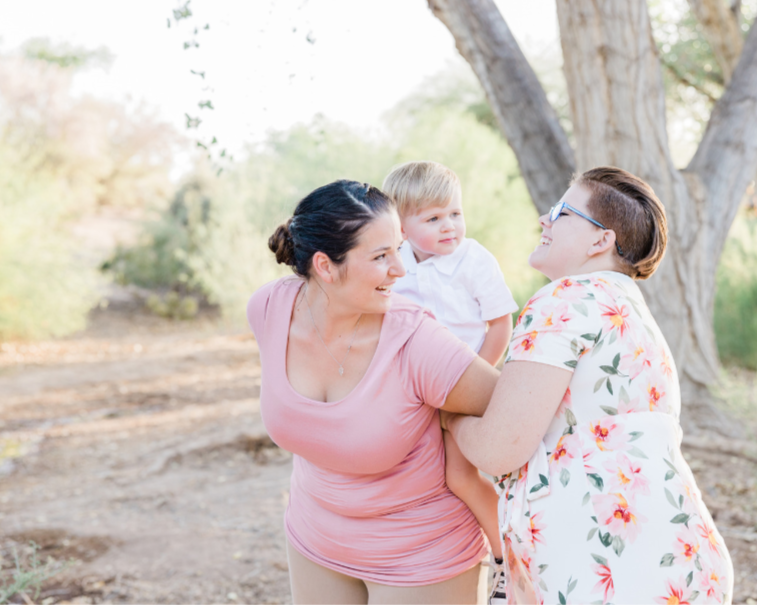
With just over six weeks left until the end of the year, many mums might feel that 2026 has gone by in a flash… Time flies when we have little ones to keep safe and to shower with love. Still, as much as we would love to see the world through rose-coloured glasses, not every aspect of motherhood is glamorous.
In this blog, I wanted to discuss gratitude, because I think it’s the perfect time of year to pause, reflect, and appreciate the good things in our lives. But what if this year has been complete chaos and you don’t feel grateful at all? Or maybe you’re simply relieved that 2026 is almost over? Well, let’s discuss that too! Let’s explore how we can feel grateful for the wonders that life brings us without forcing ourselves into fake positivity.
Gratitude in motherhood: How it can support your wellbeing
Gratitude is a feeling of appreciation for something or someone in our lives. Practising gratitude means intentionally taking time to notice and reflect on what we appreciate, for example, by counting our blessings before bed. Practising gratitude is nothing new: religious traditions have long encouraged people to give thanks through prayers and offerings (Emmons and Crumpler, 2000). Today, psychological research is exploring how deliberately cultivating gratitude can support our wellbeing.
Research into the benefits of gratitude suggests that practising gratitude can help us feel happier and more satisfied with our lives (Kirca et al., 2023). Although this isn’t going to overhaul your life overnight, practising gratitude may help you notice and appreciate the positives alongside the challenges.
The good thing about practising gratitude is that it doesn’t require you to set aside extra time. And that’s convenient when you’re a mum spending your day rushing everywhere, isn’t it? Practising gratitude in your daily life can be as simple as noticing that your partner emptied the dishwasher and telling yourself, “I’m grateful they took this task off my list.” Or watching your child play and reminding yourself what a little wonder this human being is and how blessed you are to be their mummy.

Deliberately looking for something to appreciate might feel forced at first (like, okay, they emptied the dishwasher, but the whole kitchen is a war scene!). Yet, with practice, noticing the things you may be grateful for may start to feel more natural. When we focus our attention on the positive things in our lives, we give them more space to grow.
“It is not happiness that makes us grateful. It’s gratefulness that makes us happy.”
David Steindl-Rast
When gratitude feels difficult

Sometimes, we know we have many things to be grateful for, and we know how fortunate we are compared to others, yet we struggle to feel grateful. And then comes the guilt… because we’re so lucky, why can’t we be happy? This is when the pressure to be grateful can add to your distress. You can take note of the things you appreciate and acknowledge them on a logical level, but you can’t force a feeling.
Research has shown that believing we shouldn’t feel a negative emotion like sadness can make that emotion more prominent (Bastian et al., 2012). If you’re hurting, you don’t need to push those feelings aside to make room for gratitude. Instead, you can offer yourself compassion and make space for what you’re experiencing.
An interesting finding from psychological research is that gratitude practices appear to be more effective at increasing enjoyable emotions than decreasing uncomfortable ones (Choi et al., 2025). In other words, practising gratitude may help you appreciate the joyful moments in your life and support your overall wellbeing; but gratitude isn’t a way to simply snap out of a bad mood.
Importantly, you can appreciate the good in your life and still need more rest, more support, or something to change. Gratitude doesn’t mean you have to be satisfied with everything as it is. Going back to the dishwasher example, thanking your partner for emptying it doesn’t mean you can’t expect them to do more.
Now, what if gratitude itself brings uncomfortable emotions? Acknowledging the good that others have done for you can bring up feelings of indebtedness or even guilt (Layous et al., 2017). This might show up in your relationships, with your partner for instance. Have you noticed how hard it can be sometimes to say “thank you”, especially when you feel guilty about being on the receiving end? Accepting support isn’t always easy, and recognising it may make us worry that we “owe” the other person something. If that happens, take a moment to notice how you feel without judging yourself. You can appreciate someone’s kindness without treating it as a debt to repay. Being able to receive what others give us with gratitude can also create opportunities for deeper connection.

How to practise gratitude at the end of the year
So, how do we approach gratitude? And how can we cultivate it by reflecting on the past year? You might want to try a couple of options and see which one fits you best.
One way to practise gratitude is to write a list of things you’re grateful for. For example, each night before going to bed, you might choose to write down three things you appreciated during the day. Or, to make it about the year, you could take on the following challenge: each day until the end of December, list three good things that 2026 has brought you. You might not feel the benefits of this practice straight away. In one study, researchers found no clear increase in grateful mood after two weeks, but improvements were apparent after four weeks and helped explain the wellbeing benefits (Bohlmeijer et al., 2022). December gives you a whole month to explore this daily practice, so give yourself time and see how you go. Of course, you can adapt this little gratitude challenge to whatever feels manageable: list just one thing, practise every second night, or return to the same memory as often as you like… no need to be perfect!

If you can set aside a bit more time for yourself, try writing a letter to a person who made your year more enjoyable, or a longer reflection about something you enjoyed in 2026. In one study, these longer forms of gratitude writing generally had greater wellbeing benefits than lists (Regan et al., 2023). Taking time to reflect may help you connect with what that person or experience meant to you. You can choose to share your letter or keep it for yourself (you don’t have to share it to experience the benefits).
And what if you can’t feel any gratitude at all? Writing down the things you appreciate can still be a way to bring them to the front of your mind and acknowledge them, without expecting a particular feeling. You might remind yourself, “I can see the good things in my life and still feel sad” (or anxious, resentful, angry, undervalued, or whatever is true for you). You don’t have to chase away uncomfortable emotions, and you don’t have to feel guilty about what you’re feeling. And if reflecting on the year brings up thoughts about what you did or didn’t achieve, you might also like my blog on looking back on your year with kindness.
So, what can mums be grateful for?
Here are a few ideas to get you started. I trust that you’ll find your own!
Think about your children and the little moments you’ve spent together: their arms thrown around your neck, the cuddles, the giggles, or the big smile on their face when they’re about to eat a chocolate ice cream… There are countless everyday moments worth remembering and appreciating.
Then there are the other people in your life: your partner, your family, your friends, and your support system. Even if you’re missing your village (and so many mums do!), perhaps a neighbour helped you, someone offered kindness and understanding on a hard day, or a colleague lightened your workload.
You might also appreciate having a roof over your head, a warm bed to sleep in, a sense of safety, or food in the fridge. You might feel grateful for your body and what it allows you to do. So often, we forget to notice these things in our everyday lives.
And you can appreciate yourself: the way you showed up this year, your growth, the challenges you took on, and the lessons you learned. Take some time to acknowledge yourself and your efforts.
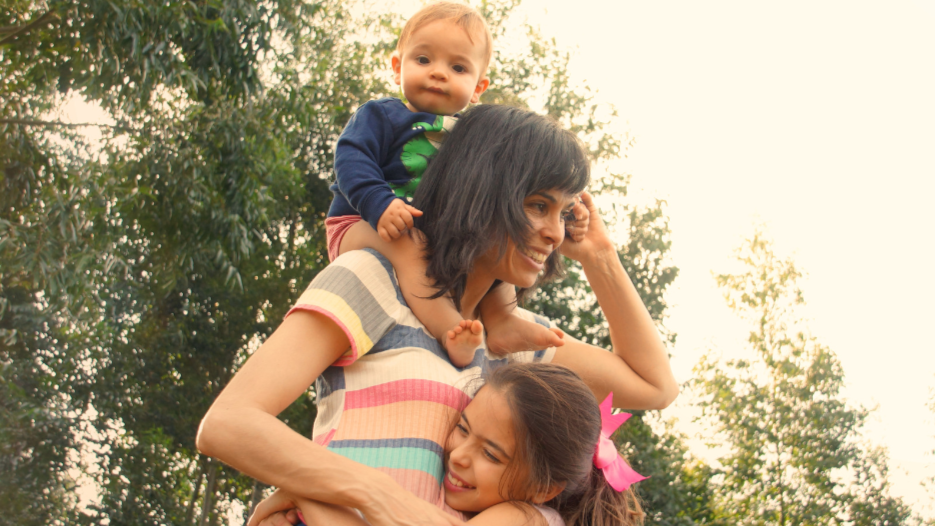
As you reflect on 2026, remember that gratitude doesn’t mean pretending everything is fine. Practising gratitude is an opportunity to give some space to the people, experiences, and little moments you appreciated along the way. And if gratitude feels out of reach right now, that’s okay too. Be kind to yourself and start wherever you are.
References
Bastian, B., Kuppens, P., Hornsey, M. J., Park, J., Koval, P., & Uchida, Y. (2012). Feeling bad about being sad: The role of social expectancies in amplifying negative mood. Emotion, 12(1), 69–80. https://doi.org/10.1037/a0024755
Bohlmeijer E, Kraiss J, Schotanus-Dijkstra M and ten Klooster P (2022) Gratitude as Mood Mediates the Effects of a 6-Weeks Gratitude Intervention on Mental Well-Being: Post hoc Analysis of a Randomized Controlled Trial. Front. Psychol. 12:799447. https://doi.org/10.3389/fpsyg.2021.799447
Choi, H., Cha, Y., McCullough, M.E., Coles, N.A. & Oishi S. (2025). A meta-analysis of the effectiveness of gratitude interventions on well-being across cultures, Proc. Natl. Acad. Sci. U.S.A. 122 (28) e2425193122. https://doi.org/10.1073/pnas.2425193122
Emmons, R. A., & Crumpler, C. A. (2000). Gratitude as a human strength: Appraising the evidence. Journal of Social and Clinical Psychology, 19(1), 56-69. https://doi.org/10.1521/jscp.2000.19.1.56
Kirca, A., M. Malouff, J. & Meynadier, J. The Effect of Expressed Gratitude Interventions on Psychological Wellbeing: A Meta-Analysis of Randomised Controlled Studies. Int J Appl Posit Psychol 8, 63–86 (2023). https://doi.org/10.1007/s41042-023-00086-6
Layous K, Sweeny K, Armenta C, Na S, Choi I, et al. (2017) The proximal experience of gratitude. PLOS ONE 12(7): e0179123. https://doi.org/10.1371/journal.pone.0179123
Regan, A., Walsh, L.C. & Lyubomirsky, S. Are Some Ways of Expressing Gratitude More Beneficial Than Others? Results From a Randomized Controlled Experiment. Affec Sci 4, 72–81 (2023). https://doi.org/10.1007/s42761-022-00160-3